

Jhora is a traditional folk dance of the Indian state of Uttarakhand. It is performed by the men and women of the region and is known for its lively and energetic movements. The dance is typically performed during festivals and celebrations, and is accompanied by traditional musical instruments such as the dhol and the thali.
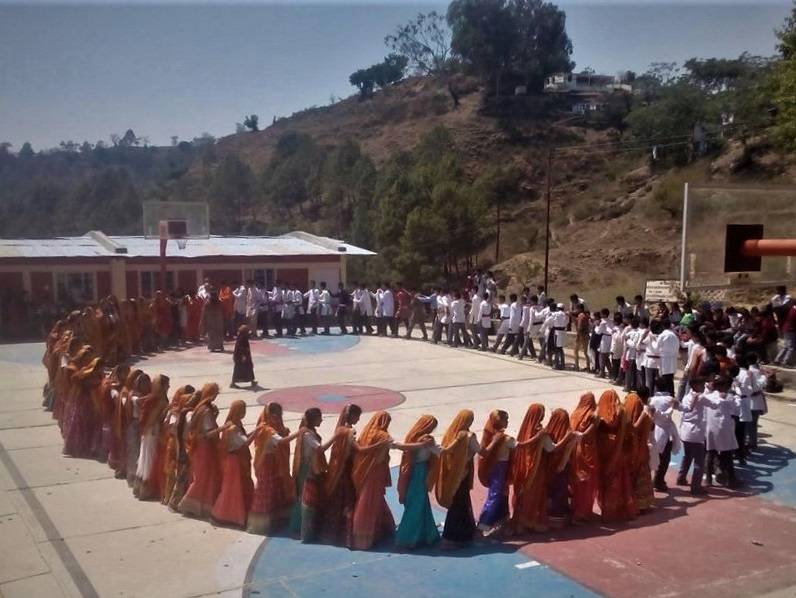
The dance is characterised by fast-paced footwork and energetic body movements, with the dancers forming a circle and taking turns performing solo and group routines. The dance is accompanied by traditional singing, which is led by a group of singers known as the "Jhora Bhopa."
The costumes worn by the dancers are colourful and traditional, and consist of a ghagra (long skirt), a blouse, and a dupatta (long scarf) for women, and for men, the costumes are traditional with a dhoti (a long piece of cloth wrapped around the waist) and a kurta (a long shirt). The dancers also wear jewellery such as bangles and necklaces, which add to the lively atmosphere of the dance.
The Jhora dance is believed to have originated from the ancient rituals and ceremonies performed by the communities of Uttarakhand. The dance is said to symbolize the community's connection to the natural environment and their gratitude towards nature. It is passed down through generations and considered an important part of the cultural heritage of Uttarakhand.
In addition to the Jhora, there are many other folk dances in Uttarakhand such as Langvir Nritya, Panda Nritya, Bhotiya Tribal Folk Dance, Jhumelia, Chouphulia, Chhapeli, Chancheri and many more. Each dance has its own unique style, costumes, and music, and they all reflect the rich cultural heritage of the state.
Folk dances of Uttarakhand are an important part of the cultural heritage of the state. They are performed during festivals and celebrations, and are an expression of the community's joy and happiness. Jhora is a famous folk dance of Uttarakhand, known for its lively and energetic movements. The costumes worn by the dancers are colorful and traditional and the dance is accompanied by traditional singing, led by a group of singers known as the "Jhora Bhopa". This dance is passed down from generation to generation and is an important part of the cultural identity of the state

If you have an doubts, Please let me know